
Community theatre has been a vital part of Winnipeg’s cultural landscape for nearly a century. The tradition of volunteer-driven amateur performance runs deep in the city’s diverse communities. This article traces that history – from Mennonite church youth groups in the 1930s to the thriving ecosystem of community companies active today.
Timeline: Community Theatre in Winnipeg
| Period | Milestone | Significance |
|---|---|---|
| 1870s | ~7,000 Mennonites migrate from Russia to southern Manitoba | Foundation of Manitoba’s Mennonite community |
| 1923-1930 | Russlaender migration: ~21,000 Mennonites arrive from Soviet Union | Major community growth; German-language cultural institutions established |
| 1930s | Jugendverein (youth society) theatre begins in Mennonite churches | First organized theatrical performances in the community |
| 1958 | Royal Manitoba Theatre Centre founded | Canada’s first English-language regional theatre – anchors the professional scene |
| 1972 | Winnipeg Mennonite Theatre officially named | Formalizes decades of community performance tradition |
| 2019 | Canadian Parliament declares Mennonite Heritage Week | National recognition of Mennonite cultural contributions including the arts |
| 2023 | WMT concludes operations after 50+ years; Russlaender centenary | End of an era; legacy continues through other companies and cultural memory |
| 2025 | 500th anniversary of Anabaptist movement origins | Global recognition of the tradition from which Mennonite communities emerged |
| 2025-2026 | Active community companies: Dry Cold, Hood & Dagger, 7 Ages, etc. | Tradition continues with new companies, new works, new audiences |
Mennonite Roots
To understand community theatre in Winnipeg, you have to start with the Mennonite story. Their migration, settlement, and strong tradition of voluntary association created fertile ground for amateur performance – long before any official theatre company was founded.
From Russia to Manitoba
The Mennonite presence in Manitoba dates to the 1870s, when approximately 7,000 Dutch Mennonites migrated from Russia, drawn by promises of land, cultural autonomy, and military service exemption. The Russlaender migration of 1923-1930 brought approximately 21,000 more from the Soviet Union. Today, Winnipeg is home to one of the largest urban Mennonite populations globally – over 20,000 residents and 45 churches.
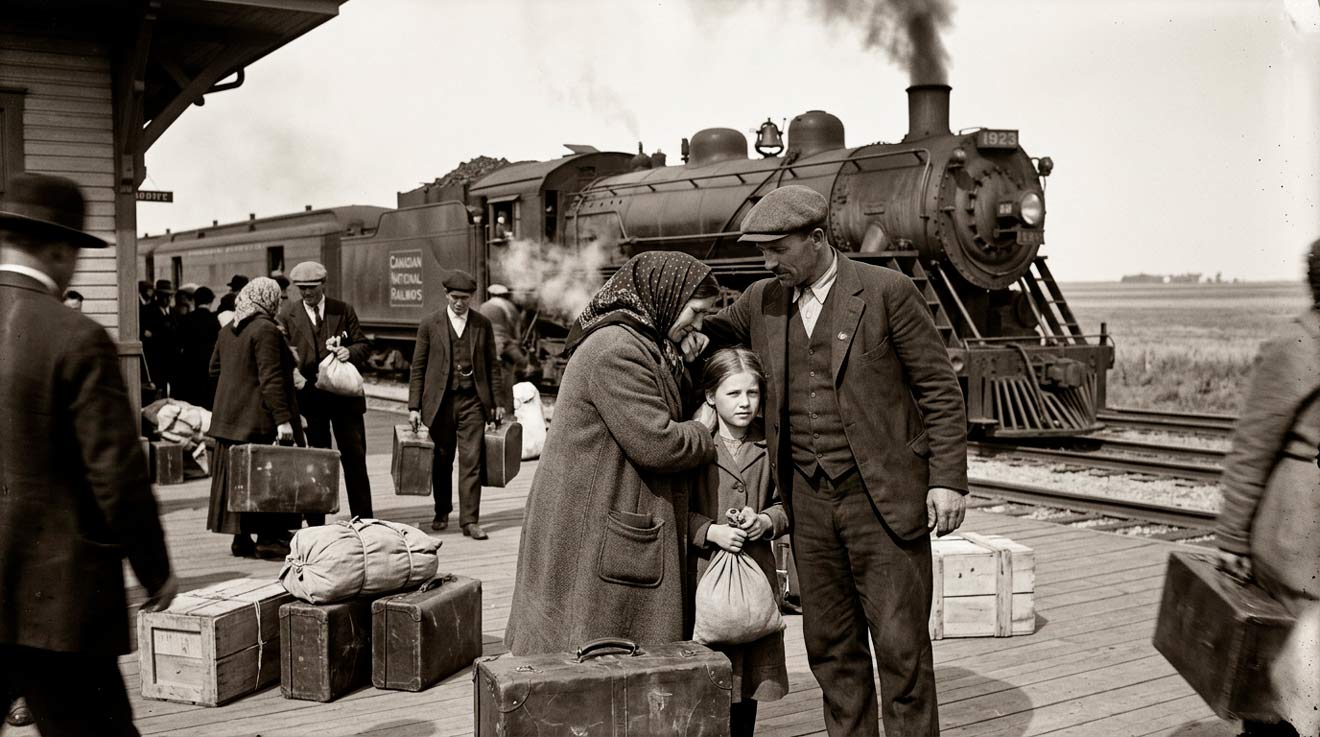
“Winnipeg has one of the largest urban Mennonite populations in the world.”
– The Canadian Encyclopedia
From Youth Groups to the Stage
Church youth societies – Jugendvereine – organized dramatic readings and plays as both entertainment and moral instruction in Mennonite congregations beginning in the 1930s. These informal beginnings gave rise to the Winnipeg Mennonite Theatre (WMT), officially named in 1972 but rooted in the First Mennonite Church’s youth society decades earlier.
WMT operated as a not-for-profit amateur company for over 50 years, producing approximately two shows per year. Repertoire ranged from dramas and comedies to musicals and operas – both classics and new works on Mennonite themes by local writers.
“WMT encourages and welcomes the participation of people of all ages, both on-stage and behind the scenes, both from the Mennonite community and from the community-at-large.”
– Winnipeg Mennonite Theatre, from its archived description
The Bilingual Tradition
One of Winnipeg’s Mennonite community theatre’s most distinctive features was its bilingual heritage. Early productions were naturally in German, reflecting the community’s primary language. Over decades, companies like WMT transitioned to primarily English while maintaining the option of German-language performances – a combination virtually unique in Canadian theatre.
| Language | Role in Theatre | Status Today |
|---|---|---|
| High German | Original productions, classical adaptations | Still used in some church services and cultural events |
| Plautdietsch (Low German) | Comedy, informal performances, cultural connection | Actively preserved through cultural organizations |
| English | Increasingly primary language from 1970s onward | Standard for most community theatre in Winnipeg |
| Bilingual productions | WMT signature – English with German-language shows | Rare; legacy carried in cultural memory |
Today’s Community Theatre Landscape
While the Winnipeg Mennonite Theatre may have concluded its run, the stage did not go dark. Today, a new generation of community-driven companies has emerged, each bringing its own energy, mission, and creative vision to the city.
Active Companies
| Company | Founded / Active | Distinguishing Feature |
|---|---|---|
| Dry Cold Productions | Active | Musicals and plays; Kimberly Akimbo at PTE (May 2026) |
| Hood and Dagger Productions | Active | Charitable model – j$14,900+ to charity in first 2 years |
| 7 Ages Productions | 25+ years | Serves both Brandon and Winnipeg communities |
| The Dramatic Theatre Company | Active | Full 2026 season; offers classes and open auditions |
| ACT Manitoba | Ongoing | Umbrella org – festivals, workshops, script library |
Professional Anchors
- Royal Manitoba Theatre Centre – Canada’s oldest English-language regional theatre (founded 1958)
- Prairie Theatre Exchange – contemporary Canadian works, Art Common free spaces for artists
- Manitoba Theatre for Young People (MTYP) – theatre school, youth programming, 2026 gala
- Theatre Projects Manitoba – new plays, 2025/2026 season with seven playwrights
The WMT Legacy
The Winnipeg Mennonite Theatre concluded its operations in 2023 after more than 50 years. The board cited challenges including an aging volunteer base, declining participation, and financial pressures worsened by the pandemic – challenges echoed by community theatres across North America.
WMT’s legacy is nonetheless significant. The company trained generations of performers and arts administrators. It preserved Mennonite cultural heritage through theatrical performance. It demonstrated that volunteer-driven community theatre could maintain high artistic standards over decades. And it proved that a small, dedicated group of amateur artists could make a lasting cultural contribution to a city’s life.
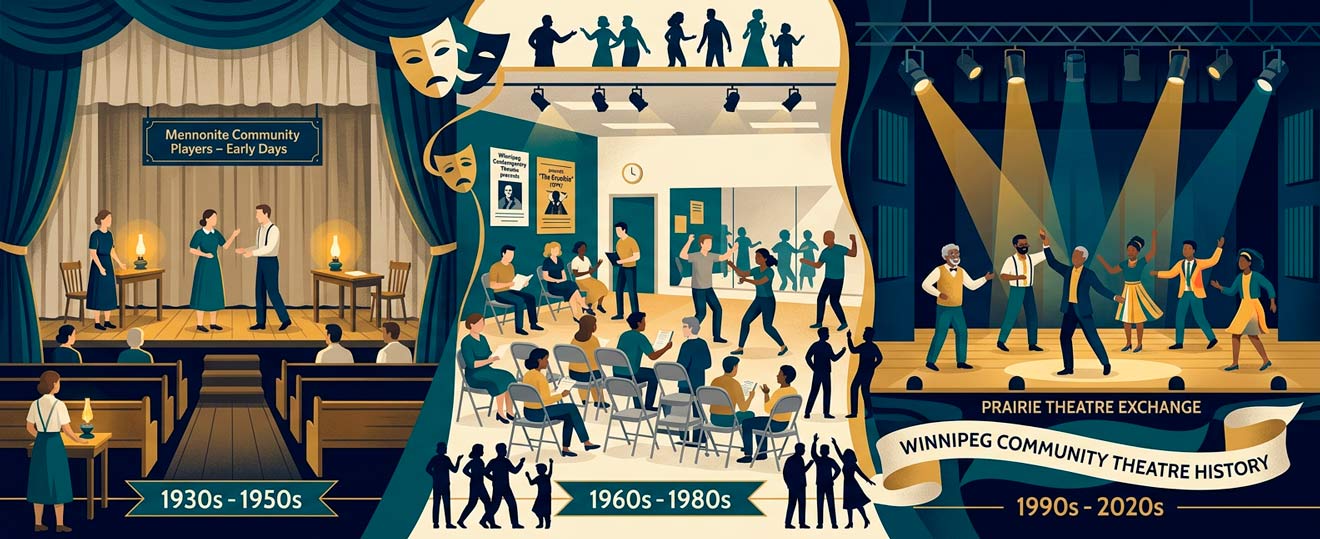
Community Theatre Values (Drawn from the WMT Model)
- Accessibility – open to all, regardless of experience, background, or ability
- Volunteerism – every role from actor to ticket-seller is a gift of time and talent
- Cultural preservation – classic works and new plays on community themes
- Education – mentorship, skill development, exposure to diverse theatrical traditions
- Community building – shared creative work that connects people across generations
Mennonite Heritage Resources
| Resource | Location / Access | What It Offers |
|---|---|---|
| Mennonite Heritage Village | Steinbach, MB | Museum: exhibits, multimedia, wagon rides through farmland |
| Centre for Transnational Mennonite Studies | University of Winnipeg | Academic research, public programs, documentary films |
| Mennonite Historical Society of Canada | National | Publications, archival research, community documentation |
| Russlaender Migration documentary | Refuge 31 Films (2023) | Film: “From Revolution to Reflection” – centenary story |
| ACT Manitoba | Provincial | Script library, workshops, annual theatre festival |
Fun Fact: The 2023 Russlaender centenary was commemorated with a cross-country train tour retracing the original 1923 migration journey from the port of arrival through the prairies – connecting communities from coast to coast.
The spirit of community service through the arts, nurtured by organizations like the Winnipeg Mennonite Theatre over more than half a century, continues to inspire and connect people across Winnipeg’s vibrant performing arts community.
Disclaimer: This website provides independent informational content about theatre, performing arts, and Mennonite cultural heritage in Winnipeg, Manitoba. It is not affiliated with, endorsed by, or operated by the former Winnipeg Mennonite Theatre, any of its former board members, or any theatre company mentioned on this site. The Winnipeg Mennonite Theatre concluded its operations in 2023. For information about active theatre companies in Winnipeg, please visit their official websites directly. Historical references to WMT are based on publicly available archival sources and are presented for educational purposes only.