
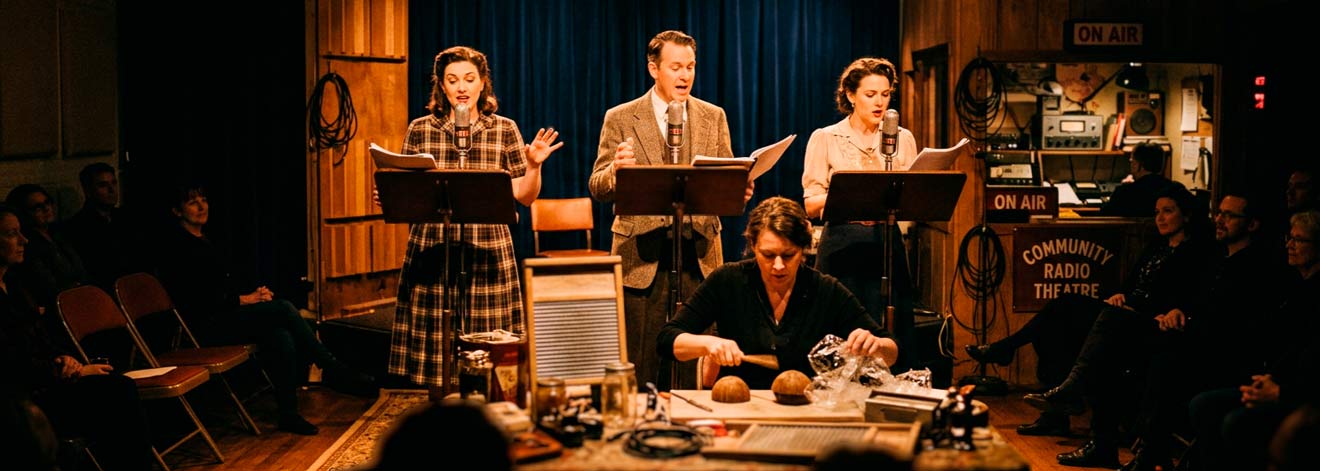
Radio night theatre is a distinctive form of live performance that recreates the magic of old-time radio drama on a community stage. Performers stand at microphones, scripts in hand, while a foley artist creates live sound effects – transporting audiences back to the golden age of broadcasting when families gathered around their receivers for comedies, mysteries, and dramas.
Fun Fact: The golden age of radio drama (1920s-1950s) reached an estimated 90% of American households. Orson Welles’ 1938 broadcast of “War of the Worlds” famously caused real panic among listeners who tuned in late and missed the fiction disclaimer.
Mennonite Radio Heritage in Canada
Radio broadcasting has played an important role in Mennonite communities across the Canadian prairies. Mennonite-produced radio programs served multiple purposes: preserving the German language (both High German and Plautdietsch), sharing faith-based content, connecting geographically dispersed congregations, and providing cultural programming reflecting Mennonite values.
Why Radio Mattered to Mennonite Communities
| Function | How Radio Served It | Legacy Today |
|---|---|---|
| Language preservation | Programs in High German and Plautdietsch | Ongoing through cultural organizations, church services |
| Faith community | Sermons, hymns, devotional programming | Podcasts, online streaming from Mennonite churches |
| Geographic connection | United dispersed rural communities across vast prairies | Social media, online communities |
| Cultural expression | Music, storytelling, dramatic readings | Community theatre, festivals, heritage events |
| News and information | Community announcements, agricultural updates | Digital newsletters, organizational websites |
Winnipeg – with one of the largest urban Mennonite populations in the world – has been a natural center for Mennonite media activity. The Centre for Transnational Mennonite Studies at the University of Winnipeg continues to document this broadcasting heritage alongside other aspects of Mennonite cultural life.
“Mennonite Heritage Week recognizes Mennonite resilience, cultural production, and peacemaking efforts.”
– Canadian Parliament declaration, 2019
The Radio Night Theatre Format
Live radio drama follows a simple, repeatable structure. Here is how a typical radio night comes together on stage.
How It Works
- Performers stand at microphones with scripts – focus is entirely on vocal performance
- A foley artist creates live sound effects using everyday objects (coconut shells for hooves, cellophane for fire)
- A narrator/announcer sets scenes, provides transitions, interacts with audience
- Live musical interludes between scenes – often period-appropriate songs
- Humorous “commercial breaks” recreating vintage advertising styles
Why the Format Works for Community Theatre
| Advantage | Details |
|---|---|
| Minimal cost | No sets, minimal costumes, basic audio equipment only |
| Flexible cast size | Performers can double/triple roles – no visual confusion |
| Broad audience appeal | Novelty factor engages all ages, especially younger viewers new to radio |
| Accessible for performers | No blocking, no memorization – focus on voice and timing |
| Community engagement | Easy to incorporate local references, humour, and musical talent |
| Educational value | Teaches broadcasting history; trains vocal technique and ensemble timing |
Classic Radio Drama History
Radio drama reached its peak during a few extraordinary decades. Below are the most influential programs from that golden era.
Golden Age Highlights (1920s-1950s)
| Program | Network | Genre | Notable Fact |
|---|---|---|---|
| The Shadow | Mutual/CBS | Mystery/thriller | Orson Welles voiced the lead; Lamont Cranston became iconic |
| Suspense | CBS | Thriller anthology | Ran 1942-1962; featured Hollywood stars in standalone episodes |
| Lux Radio Theatre | CBS | Drama adaptations | Adapted Hollywood films with original stars; ran 1934-1955 |
| War of the Worlds | CBS (Mercury Theatre) | Sci-fi | 1938 broadcast caused real public panic |
| CBC Radio Drama | CBC | Canadian originals | Commissioned Canadian playwrights; employed actors nationwide |
In Canada, the CBC played a central role in developing radio drama, commissioning original works and adapting literary classics. CBC radio drama helped establish Canadian theatrical voices and provided employment for actors and writers across the country. The tradition never entirely disappeared – and the rise of podcasts and audio drama has sparked renewed interest in both historical and contemporary audio storytelling.
Fun Fact: The CBC’s radio drama department at its peak employed more actors than any other single employer in Canadian entertainment – making it a crucial institution for developing Canadian performing talent.
Staging a Radio Night Event
Putting on a radio night requires minimal resources but careful planning. Follow this checklist to get started.
Checklist for Community Companies
- Select or commission script(s) – classic radio plays, original works, or adaptations
- Recruit performers – emphasize vocal range and comic timing over appearance
- Assign a foley artist – the live sound effects are often the audience’s favourite part
- Find a host/announcer – someone with natural warmth and audience rapport
- Arrange musical interludes – local musicians add community flavour
- Set up simple tech – 2-4 microphones, basic sound system, music stands for scripts
- Create vintage-style program – adds to the period atmosphere
- Consider a pre-show or intermission reception – enhances the social event feel
Community theatre companies across Manitoba – including Dry Cold Productions, Hood and Dagger Productions, and The Dramatic Theatre Company – regularly explore varied formats like radio night theatre to engage audiences beyond traditional staging. The Association of Community Theatres of Manitoba (ACT Manitoba) provides additional resources and support for companies experimenting with new performance formats.